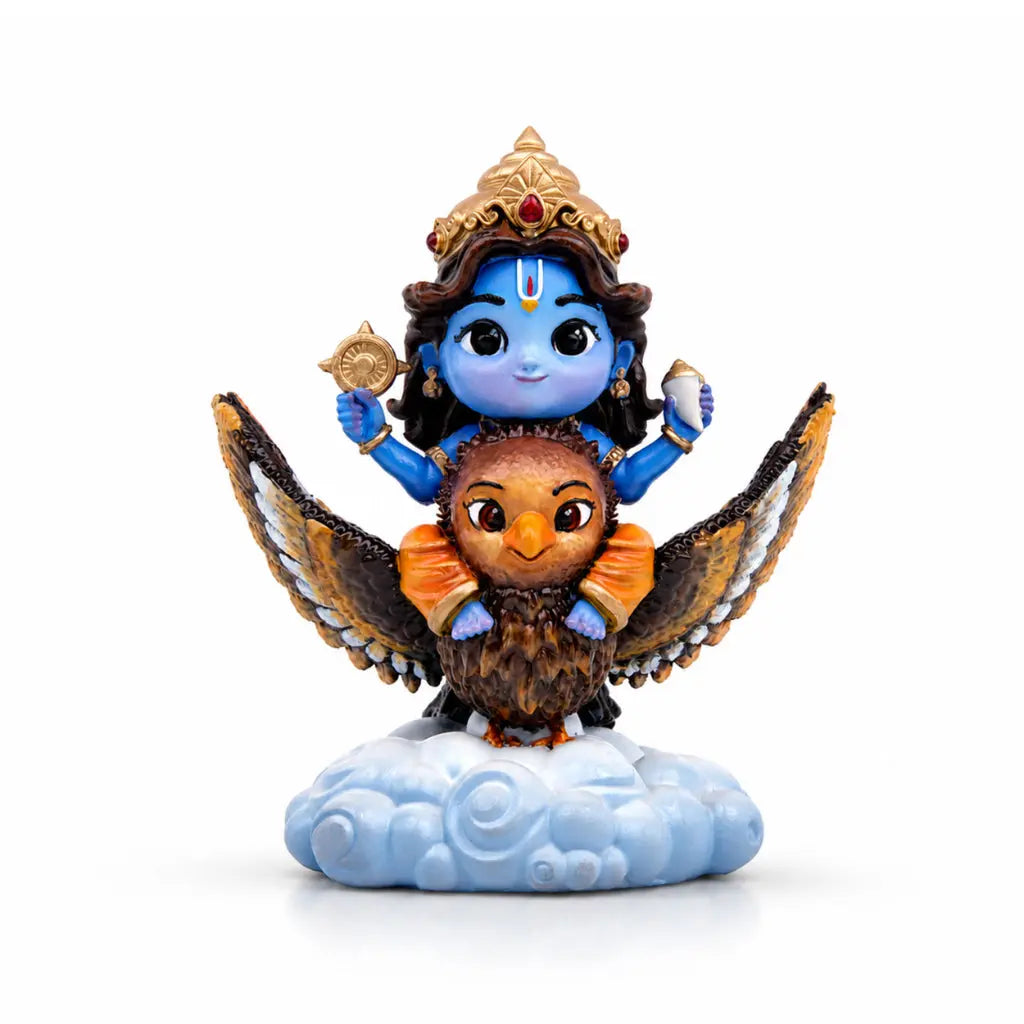


Tale of the Vamana Avatar of Lord Vishnu

Hindu mythology is full of fascinating stories that teach us valuable lessons about life and spirituality. One such story is that of the Vamana Avatar, the fifth incarnation of Lord Vishnu. Unlike his other grand and powerful avatars, Vamana came as a humble dwarf to show that even the smallest form can make the biggest impact.
In today’s blog, we will discuss the complete story of the Vamana Avatar of Vishnu, its significance, and the lessons we can learn from it.
Who is Vamana in Hindu Mythology?
According to the legends, Vamana is the fifth avatar of Vishnu, one of the ten incarnations that are collectively known as Dashavatara. The name "Vamana" means "dwarf" in Sanskrit, and this avatar is unique because Vishnu took the form of a small Brahmin boy to defeat pride and restore balance in the world.
This story of the Vamana avatar revolves around King Mahabali, a powerful yet proud ruler, and Lord Vishnu, who with his clever plan and wisdom brought humility and balance back into the universe.
The Legend Associated with Vamana Avatar of Vishnu
The tale of the Vamana Avatar begins with King Bali, also known as Mahabali.
Bali was the grandson of Prahlada (the famous devotee of Lord Vishnu from the Narasimha Avatar story) and was known for his generosity and devotion.
However, he was no ordinary king. Bali conquered the earth, the heavens, and the netherworlds, becoming the undisputed ruler of the three realms. While Bali’s devotion was genuine, his growing power made him a man of arrogance and pride. This worried the gods, especially Indra, the king of the heavens, who turned to Vishnu for help.
Vishnu decided to take matters into his own hands but not with brute force. Instead, he chose a clever and subtle approach and manifested himself as Vamana, a young dwarf Brahmin boy.
Vamana was a small, innocent-looking boy dressed simply, carrying a wooden umbrella, with a calm and divine energy.
One day, he walked into the grand sacrificial ceremony (yajna) that King Bali was performing.
Now, Bali was known for his generosity and hospitality, so when Vamana approached him, he welcomed the boy with open arms. Bali asked him, “What can I give you, little one? Gold? Land? Cattle? Name your wish!”
However, to everyone’s surprise, the boy made a very unusual request. He said, “I only need three paces of land, measured by my own small feet.”
The simplicity of the request made Bali laugh. Why ask for such a small thing when he could have asked for riches or kingdoms? Even though Bali’s advisor, Shukracharya, warned him that this boy was no ordinary Brahmin but Lord Vishnu himself, Bali kept his promise. Bound by his word, he granted Vamana’s wish.
The moment Bali agreed to the request, Vamana began to grow. And grow. And grow. He transformed into Trivikrama, a giant cosmic form that covered the entire universe. With his first step, Vamana covered the entire earth and with the second step, he took all of the heavens.
By now, there was no place left for his third step. Vamana looked at Bali and asked, “Where should I place my third step?”
Realizing he was standing before Lord Vishnu, Bali bowed his head and said, “Place your third step on my head, my Lord.” This act of surrender was the mark of Bali’s devotion and humility that he was known for.
Read Also:- Most Powerful Gods in Hinduism
Vamana placed his foot on Bali’s head, pushing him into the netherworld (Patala). But Vishnu was pleased with Bali’s unwavering devotion and righteousness, so he granted him a special boon. Bali would become the ruler of Patala and could return to earth once a year to bless his devotees. Today, this annual visit of King Bali on earth is celebrated as Onam in Kerala, a festival of prosperity and happiness. During this time, people decorate their homes with beautiful flower arrangements called Pookalam, prepare traditional feasts (Onasadya) and everyone comes together to celebrate Bali’s prosperous and golden rule.
Takeaway
The Vamana Avatar of Lord Vishnu teaches us that power doesn’t always lie in size or strength. Sometimes, intelligence, humility, and wisdom can achieve what brute force cannot. By taking a dwarf’s form, Vishnu demonstrated that even the smallest being can bring about the biggest change.
Hence, stay humble, no matter how powerful or successful you become because true devotion lies in surrendering to the divine.
Frequently Asked Questions (FAQs):
Q. Is Vamana a Vishnu?
A. Yes, Vamana is the fifth incarnation of Vishnu, one of the parts of his Dashavatara.
Q. Which god avatar was Vamana?
A. Vamana was the dwarf avatar of Lord Vishnu, taken to humble King Bali and restore balance.
Q. What did Vamana ask from King Bali?
A. Vamana asked for three paces of land, measured by his own feet.
Q. Why Did Vamana Kill Bali?
A. Vamana didn’t kill Bali. Instead, he settled him off his pride and rewarded his devotion by making him the ruler of Patala.
Q. Who is the purest form of Vishnu?
A. According to the Vaishnava tradition, Krishna, the eighth of the Dashavatara, is the purest form of Vishnu.
Read More:- Famous Hanuman Temples in Delhi | 108 Names of Lord Ganesha
LATEST BLOGS


Sep 04, 2026
108 Names of Lord Shiva with Meanings: The Complete Guide (Ashtottara Shatanamavali)
Read more →


